

The Cottage
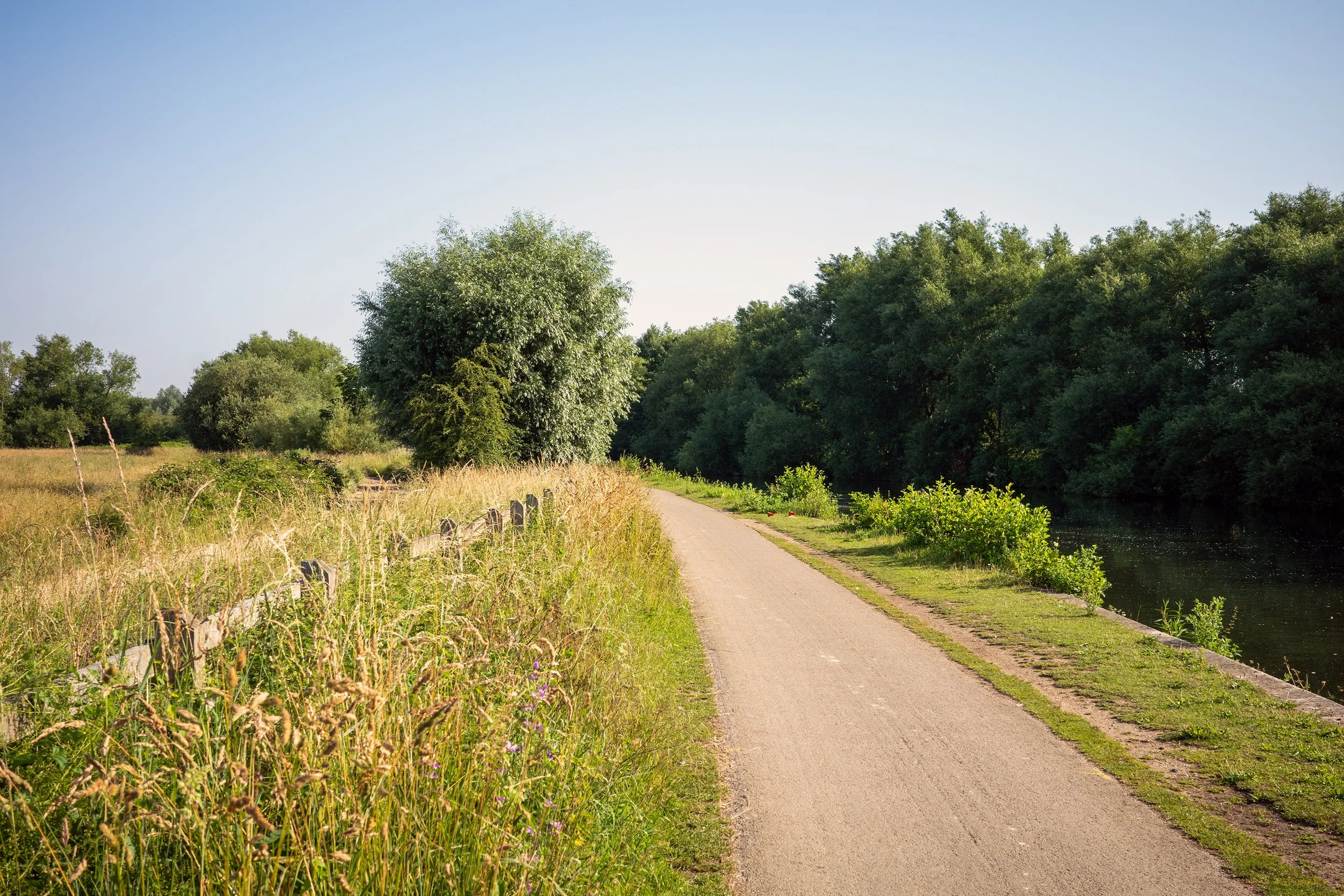
Beyond the fence lies the field where Prerna dreams of living in a quaint English cottage.
“Now that I think of it, we should have started at six,” Prerna says as we begin our run, realising that even the UK — a country better known for cloud and drizzle — can reach twenty-degree temperatures by 7 am.
We continue down a quiet residential street, past a car wash and a shop selling aquarium supplies. Other businesses are tucked between the houses, but only those centred around water seem to stand out, appearing like mirages in the morning heat.
Our formation shifts from two abreast to single file as we weave between the yet-to-be-collected wheelie bins lining the pavement. Every juke, twist, and sidestep burns precious fuel — energy we’ll need once the sun reaches full strength.
“Let’s just run on the road,” Prerna says.
She discovered this route not long after moving here last autumn, when the leaves were falling rather than wilting. Because this was Oxford — a quintessentially British city, complete with punting — she assumed there had to be a riverside path nearby.
“So I looked at a map. And then one day I went and saw it was nice.”
She had considered cycling to Donnington Bridge and starting her run from there. But she ultimately decided against it, figuring there was little point in pedalling two-kilometres when she could simply make the journey part of her run.
“I thought, ‘Why waste the energy?’” she says.
Prerna’s riverside route is about six kilometres in total — enough for her to “get a kick.” Today’s run, however, is less fixed. The heat will decide how far we go.
“If it’s cool and shaded, then we can do a slightly longer one,” she says. “Like longer by my standards.”
For her, this loop is a monthly ritual, though she runs it more often when the weather is good. She also does weekly gym sessions, treadmill intervals, and plays tennis.
Curious, I ask what she thinks of pickleball.
Immediately, her expression hardens.
“That is treason!” she says. “Even if I lose my knees, shoulders and wrists, I will still play tennis.”
Our attention returns to the task at hand as we pass a running group gathered on the bridge above an entrance to the Thames Path.
“Melting,” Prerna says as we go by, pointing to the sweat beading on her shirt.
They smile in recognition.
What she appreciates most about this route is how much cooler it feels beside the river. Back towards town, heat radiates off the tarmac. Down here, the trees and water take the edge off. The drop in temperature is less welcome in winter, she admits, but on scorching mornings like this, it’s a godsend.
“I hate hot weather,” she says.
Ever since taking up the sport in her twenties, Prerna has listened to music while running. Today, however, on account of having me for company, she has forgone the headphones. Without anything in her ears, she must endure the sound of her own footsteps.
“Which is so annoying,” she says. “I have this thumping, and I can’t change it.”
The chance of being serenaded by songbirds, meanwhile, is slim, with most of the chirps, tweets and warbles muffled by the nearby bushes, where they’re keeping cool. Even the lone magpie we pass is silent. Fluffed up and looking frazzled, it’s perched on a signpost, seemingly transfixed by a gaggle of geese in the river, their legs in the air as they dunk their heads beneath the water in unison.
We pass another running group, on the move and chatting.
“Some of them are colour-coordinated,” Prerna says, nodding towards their matching tops, which stand out even against the brilliant green foliage and brightly painted longboats.
Further along, the light fades beneath an overpass. The retaining walls are covered in graffiti: sprawling murals with crisp edges and intricate shading that must have taken days to complete. Since her last run, someone has hastily sprayed a message across one section of wall.
“I definitely don’t recollect ‘Dump Trump’ written,” she says.
We cross a footbridge over a stream, duck beneath a railway trestle, and stop at a gate. One side is left open for bicycles. The other swings open for pedestrians. With no bikes approaching, we use the cyclists’ entrance.
“I notice how small my feet are when I’m here,” Prerna says, tiptoeing across the cattle grid, its narrow metal bars separated by gaps designed to deter livestock.
Back on firm ground, we follow the path through a grassy field with an electricity pylon in the middle. As we cross, Prerna tells me about the running vest she’s wearing. It carries all the essentials — phone, keys, and water — while fitting snugly to her body without bouncing.
“I love it,” she says. “Great technology, man.”
It’s a vast improvement over the previous model she owned, which cost half as much and chafed something awful.
“There’s a reason why it was £11,” she says.
We enter a semi-wooded stretch and continue running. Prerna tells me it’s her second favourite part of the route. She loves the “countryside vibe”: passing trains, trackside houses, and a path enclosed by a canopy of trees.
“Ooooh, look at this!” she says, gesturing with childlike delight at the blanket of shade overhead. “I think this might be more pleasant to sleep in than our rooms!”
The previous night, Prerna tells me, she struggled to sleep and decided to pass the time with a book. But as soon as she switched on the bedside lamp, a swarm of insects flew through the open window towards the light.
“So I couldn't read.”
As we continue alongside the tracks, trains thunder past just beyond the trees on their way to London Paddington. Watching them reminds Prerna of past journeys by rail. In part, she likes the ease of it: there’s no need to arrive hours in advance, and luggage restrictions are far less rigid than when flying. The carriages also feel more intimate than aircraft cabins, making spontaneous conversations with strangers more likely.
“You don't have to,” she says. “But you might just start talking.”
The path gradually opens out, bringing the railway back into view until only a metal fence and a few shrubs separate us from the tracks. We climb a gradual incline past another empty pasture before reaching what winds up being the turnaround point.
Here, there’s nowhere to hide from the blazing sun.
“This is definitely not a nice spot,” Prerna says.
We’re already a couple of kilometres beyond where she would normally turn back, meaning today’s run will be almost twice her usual distance. For Prerna, though, going further only adds to the allure.
“When I do this longer route, it feels new. There is that unknown. And when you don’t know, you keep pushing yourself.”
From here, the path is mostly downhill. We coast back beneath the canopy of trees and stop for a breather in the shade. We also use the opportunity to take a few photos.
“Workout paused,” her watch declares in a digital voice.
“Workout resumed,” it announces moments later, despite the fact that we still haven't moved.
“It’s like, ‘What are you doing? Run, bitch!’” Prerna says.
We set off again.
Once more, we go single file, this time dodging obstacles that refuse to stay still. The more minutes that tick by, the more cyclists whizz past — a sign that the morning commute is underway. Some ride solo, while others tow children in trailers. Prerna notices that none of the adults are wearing work clothes and assumes they’ll change once they get to the office.
I’m preoccupied by something else: why do so many cyclists wait until they’re almost on top of you before ringing their bell? By the time it sounds, they’re already on your heels, sending you darting in some random direction like a squirrel avoiding traffic.
Prerna has a more charitable theory. Most cyclists, she suspects, would rather not ring their bell at all, hoping you’ll hear them approaching and step aside before they have to bother you. She knows this from experience. Without a bell on her own bike, she’s never quite sure what to do when she finds herself stuck behind people on the path.
“I’ll just slow down and then say, ‘Sorry!’” she says.
We’re out of the trees and in the sun, back beside the pasture with the electricity pylon, facing the railway bridge ahead. For reasons unknown, a freight train sits motionless on the tracks above the river.
We pause too while Prerna pulls a collapsible bottle from her vest. It’s the kind with a bite valve, designed to be sucked from rather than sipped. While she wrestles with it, we discuss the passenger train cancellations that have been in the news. She assumes the intense heat somehow affects the rails. I suggest it has more to do with protecting passengers from having to wait on exposed platforms in the sun.
Then I realise the flaw in my logic: if that were the case, buses would have also been cancelled.
“I give up,” Prerna says, still unable to get a drink.
She stuffs the bottle back into her vest.
Not much further along, we reach her favourite spot on the route: a grassy meadow enclosed by a wooden fence. Here, she imagines living in a quaint stone cottage, with the river as her front garden, houseboats moored nearby, and rowing crews gliding past.
Despite its proximity to the main roads, the area feels untouched by time.
“This is special,” she says.
Around a bend, the bridge comes into view, and soon we’re climbing back towards the top. From there, the final leg of our run begins: the section Prerna dreads most, when the cool of the river fades and fatigue sets in.
“Ugh,” she says. “Why didn’t I take the bike?”